
Should You Hold It or Crack It? How to Find the Best Booster Box to Buy MTG
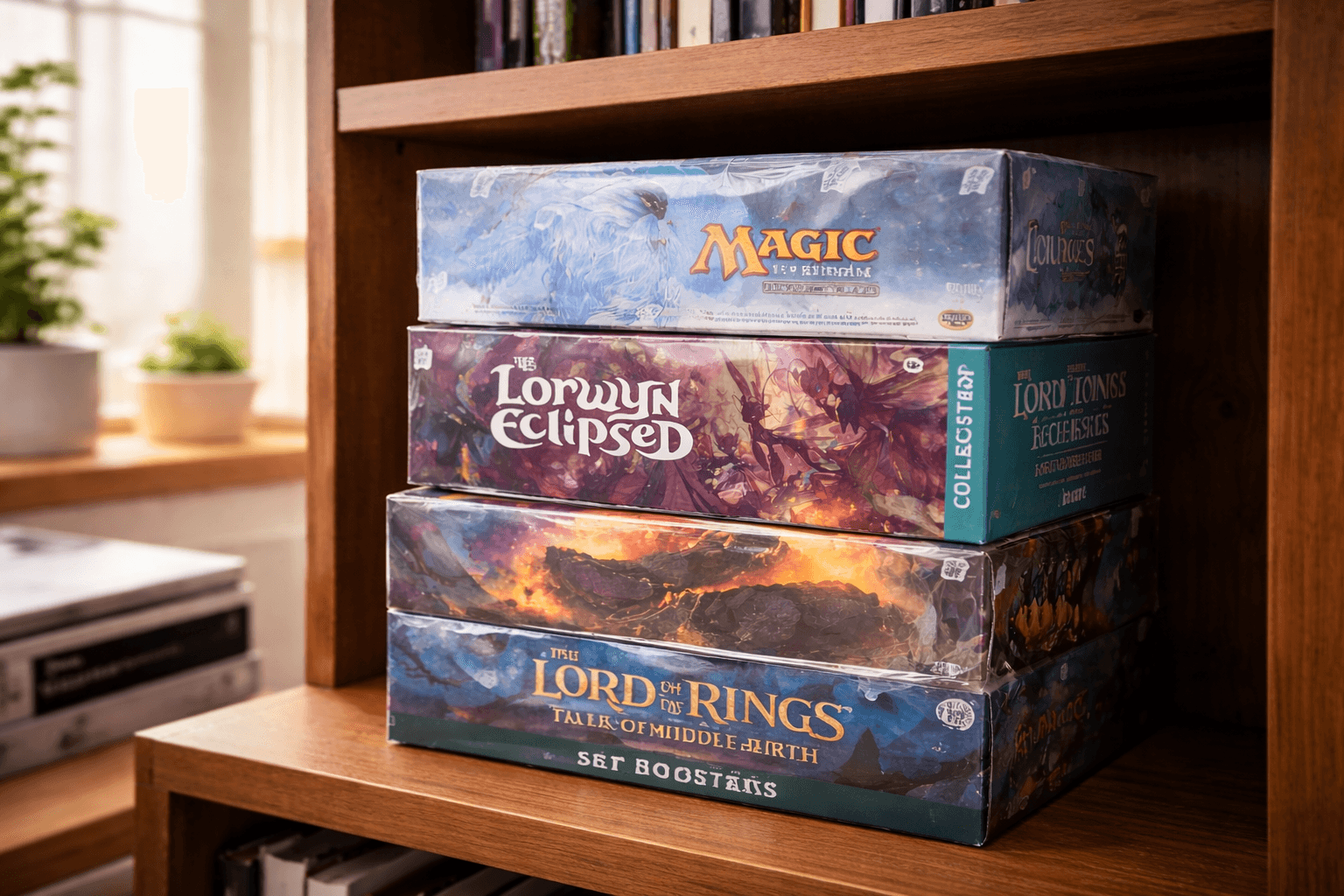
The best booster box to buy MTG right now depends entirely on what you plan to do with it after you get it home. That one question — hold it sealed and wait, or rip it open and sell the singles — should be driving every sealed product purchase you make. And yet most people skip it entirely and just buy whatever looks shiny at release.
I've been on both sides of this. I've held boxes that tripled in value. I've also cracked boxes where the expected value (EV) looked great on paper and I walked away with a pile of bulk rares and one slightly underwhelming money card. The answer is never obvious going in, but there are tools and frameworks that make the decision a lot less like a coin flip.
This guide covers which boxes are worth holding sealed for long-term value appreciation, which ones are better off opened so you can sell the singles, and how to actually run the math before you spend $150 or more on a display.
What Makes the Best Booster Box to Buy MTG Worth the Money
Before getting into hold vs. crack, it's worth laying out what separates a good sealed buy from a mediocre one.
Not every booster box is created equal from an investment or resale standpoint. A few factors that actually move the needle:
Print run size. Sets with limited or finite print runs tend to appreciate over time once supply dries up. Wizards of the Coast has gotten better at managing this, but sets like Modern Horizons 2 and The Lord of the Rings had enough demand to justify sealed holds. Universes Beyond sets with external IP (Final Fantasy, Spider-Man, LOTR) are worth paying attention to here because external fanbases create sustained demand that pure MTG sets don't always enjoy.
Card pool quality. If a set has four or five cards that are $30+ and see play across multiple formats, the floor on opening value stays higher for longer. Commander staples especially hold up because Commander doesn't rotate.
Play format relevance. Standard-legal sets depreciate faster once they rotate out of Standard. Modern and Commander-focused cards hold their value longer because the formats are non-rotating.
Collector treatments. Collector booster boxes are a different animal from play booster boxes. They're more expensive upfront but contain the bulk of a set's high-end treatments. The ceiling on individual pulls is higher, but so is the variance.
The Case for Holding It Sealed
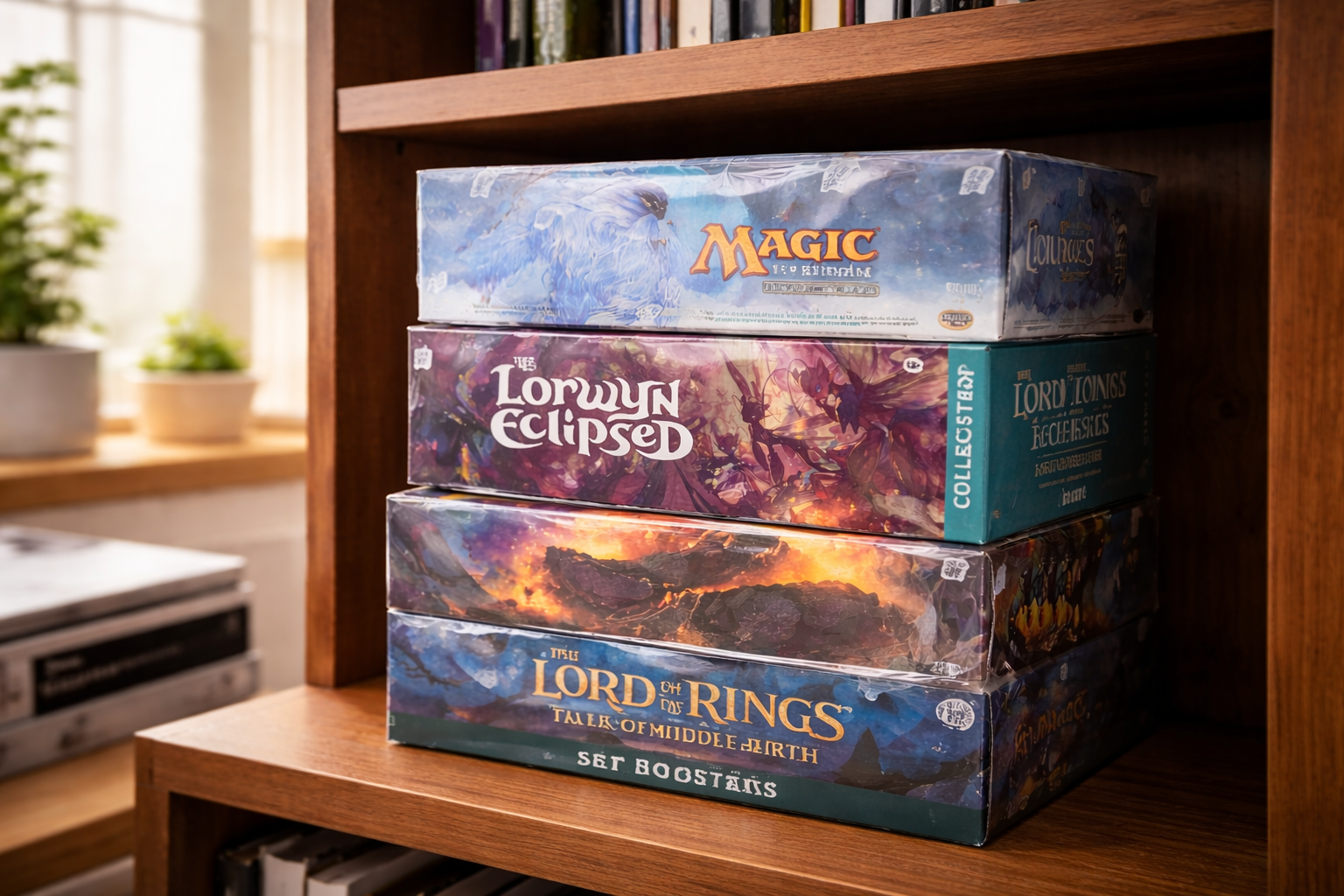
Sealed product appreciation is real, but it's slow, and it requires storage space and patience. If you're asking what the best booster box to buy MTG is for a long-term hold, the sets that have historically done best share a few traits: they were popular at release, they had deep card pools with multiple relevant formats represented, and they eventually went out of print.
Sets like Modern Horizons 2, Khans of Tarkir, original Innistrad, and the original Zendikar block are examples where sealed boxes went from $100 at release to well over $500 years later. The Lord of the Rings: Tales of Middle-earth is shaping up similarly. The Final Fantasy MTG crossover set broke day-one sales records, which suggests demand will outlast supply once print runs end.
The general principle is that you're essentially betting that (a) the game stays healthy and (b) supply dries up while demand stays consistent. That's usually a safe bet for MTG overall, but not every set ages the same way.
Boxes worth considering as sealed holds in 2026:
Sets from the Universes Beyond lineup tend to hold well sealed. The IP crossover creates an audience that doesn't just overlap with MTG players. Collector booster boxes of popular Universes Beyond releases (Final Fantasy, LOTR, Spider-Man) have historically outperformed standard play booster boxes as sealed holds, because collectors outside the MTG player base drive demand for sealed product specifically.
Modern Horizons sets are another reliable category. Modern Horizons 3 has strong non-rotating format cards. These sets typically stop being reprinted and the value of the box climbs gradually as supply decreases and tournament players need the cards inside.
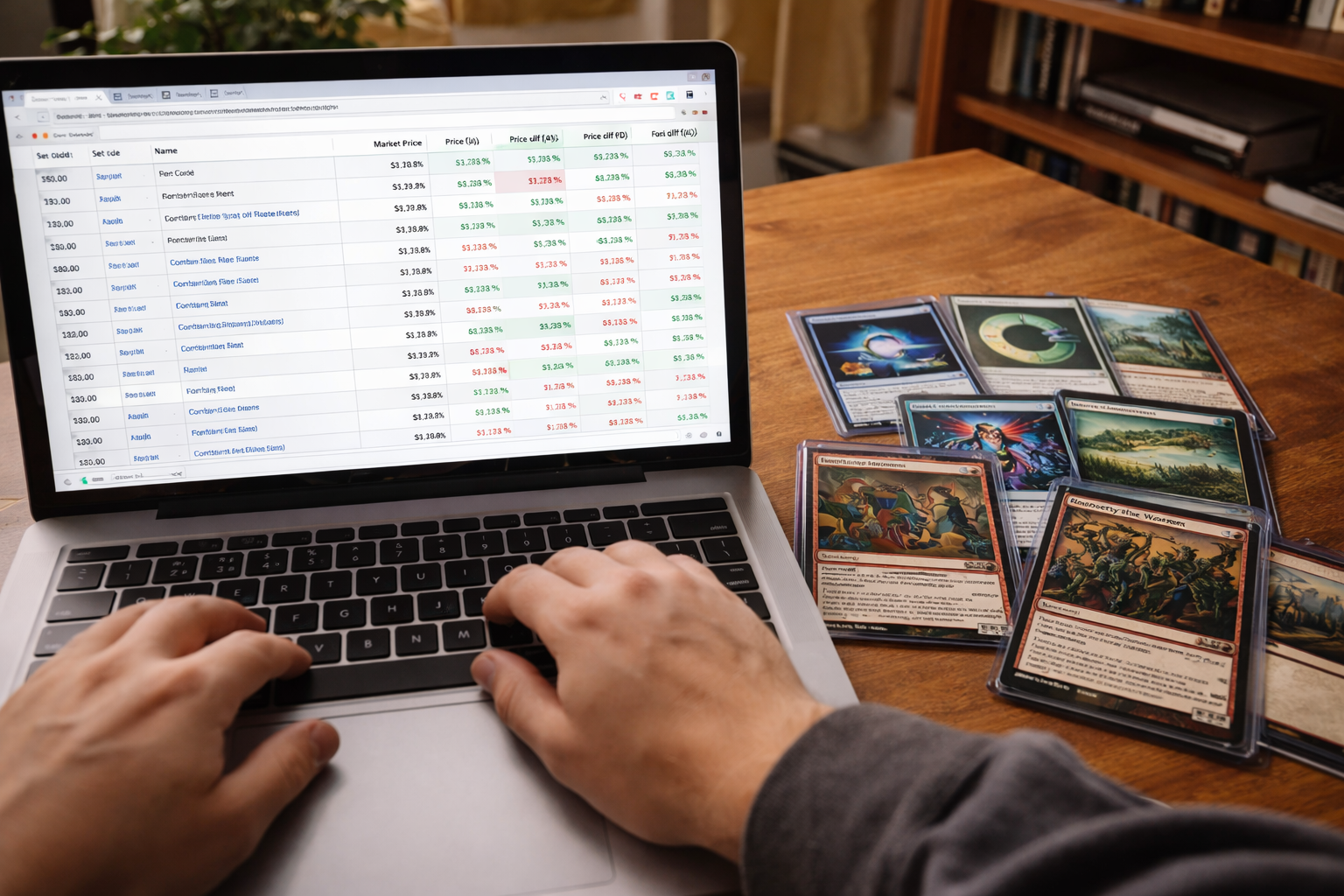
The honest reality of sealed holds is that you're tying up real capital for years. A $200 box that becomes $350 in four years is a decent return, but not if you had to buy ten of them to feel meaningful upside. If you're doing this seriously, use MoxAlpha to track sealed product market data. It's a paid tool built specifically for sellers and investors in TCG sealed product. It shows you sales velocity, profit margins on specific products, and arbitrage opportunities across the market. The platform covers Magic, Pokemon, and Yu-Gi-Oh sealed products and gives you the kind of data that makes the difference between a calculated bet and a guess.
For free sealed price tracking, MTGStocks is a solid option. It tracks historical sealed prices and gives you a reasonable picture of how a box has been trending over time.
The Case for Cracking It Open
Opening a box and selling the singles makes sense when the expected value of the cards inside is close to or higher than what you paid for the box, AND you have a way to actually move all of those cards efficiently. Before deciding which is the best booster box to buy MTG for cracking, that second part is what most people underestimate.
The math on opening boxes gets ugly fast when you factor in reality. Yes, theoretically a box of Modern Horizons 3 might have an average EV of $180 at current card prices. But that number assumes you hit the mythic rare distribution at average, that you sell every single card at TCG Low (not below), and that you don't absorb fees, shipping costs, or your own time. Run the numbers properly and you'll find most boxes open at a loss on an average hit.
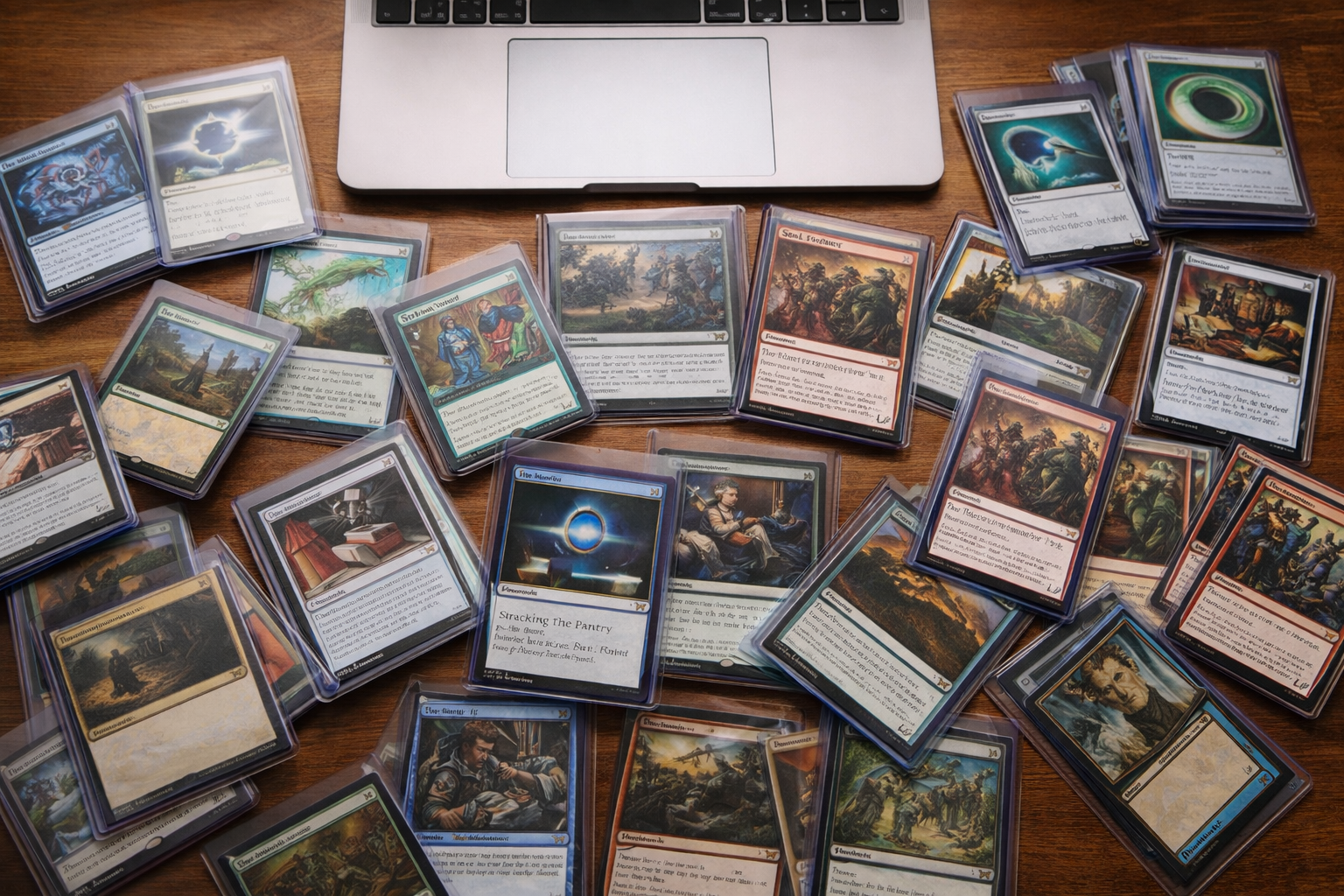
The exception is when you can move bulk efficiently. If you open a box and pull a chase card worth $60, two cards worth $20 each, a few $5-$10 staples, and then 200+ commons, uncommons, and bulk rares, you're doing okay on the money cards. The question is what you do with everything else. Most people shove it in a box and call it done. That's where they leave money on the table.
The above-bulk cards, the $1 to $5 rares that aren't worth listing manually but also aren't worth buylisting at $0.20 on the dollar, that's the dead zone. That's exactly what I built MTG Bulk Caster to solve.
You export your collection from Manabox or Moxfield into MTG Bulk Caster, set your pricing rules, and it spits out a bulk upload CSV that goes straight into eBay. No typing, no card-by-card data entry. The cards that were previously not worth listing individually become worth listing in aggregate. If you've just cracked a box and catalogued the results in Manabox (which a lot of players already do), the workflow from cards in hand to live eBay listings is genuinely fast. You can read the full walkthrough of the Manabox to eBay workflow here.
Before cracking any box, run it through one of the free EV simulators. MTG Box Sim lets you simulate opening a specific box and shows you the total card value based on current prices. It's free, pulls live pricing, and gives you a realistic picture of the range of outcomes. The Expected Value is another strong option with more detailed Monte Carlo modeling for play booster boxes, collector booster boxes, and bundles. Run it a few times to see how wild the variance actually swings.
Boxes worth cracking in 2026 are generally current Standard sets where you intend to play or draft with some of the cards, Masters sets with deep reprint pools of cards you want for Commander or Modern, and any set where your local buy/sell market for individual cards is active. If you're playing at an LGS and can trade or sell locally without shipping overhead, your margins on opened singles go up significantly.
Hold or Crack: How to Actually Make the Call
Here's the framework I use before I buy:
Step 1. Check the sealed price trend. Go to MTGStocks or MoxAlpha and look at what the box has been doing over the past three to six months. If it's been climbing since release, hold interest is healthy.
Step 2. Check the EV against the sealed price. Use MTG Box Sim or The Expected Value. If the EV of cards inside is already higher than the sealed price, the market has priced in that opening value. Holding gives you upside if the box appreciates faster than card prices. Cracking gives you liquidity now.
Step 3. Ask yourself honestly whether you can move the bulk. If you crack a box and pull 36 packs worth of commons and uncommons, what happens to all of it? If the answer is “it goes in a box in my closet,” you need a plan for those cards before opening day. A tool like MTG Bulk Caster handles this part, but you still need to spend the time cataloguing and sleeving cards.
Step 4. Consider the opportunity cost. $200 in a sealed box that becomes $280 in two years is an okay return. $200 in singles that you list on eBay next week and sell over the following month might net $160 after fees. Or $220. The variables are real.
There's no universal answer. The best booster box to buy MTG depends on your timeline, your storage situation, your eBay selling infrastructure, and how much variance you can stomach.
Tools to Help You Decide
Here's a quick reference for the tools mentioned in this post:
For tracking sealed product value: MoxAlpha is the most comprehensive sealed product intelligence tool available. It's built for people who are actively buying and selling TCG products, not just casual collectors. The platform tracks sales velocity, margins, and inventory return modeling across MTG, Pokemon, and Yu-Gi-Oh. It runs on a paid subscription model. If you're spending $500+ a month on sealed product, it pays for itself quickly.
MTGStocks Sealed is free and gives you price history on specific products. It's less real-time than MoxAlpha but solid for casual tracking.
For expected value calculations: MTG Box Sim is free and straightforward. You pick a set, it simulates a box opening and totals up the card values. Run it multiple times to get a sense of the range.
The Expected Value has more sophisticated modeling with Monte Carlo ranges and customizable resale assumptions. A step up if you want to be more precise about your projections.
For content and community: RNG-Gamez is a New Jersey-based TCG store with an active YouTube channel and community around sealed product. Rob and the team do box openings, investment discussions, and sealed market content that's genuinely useful if you want to stay current on what's moving. Worth subscribing if you're spending real money on sealed product.
For listing singles after you crack: MTG Bulk Caster handles the part of opening boxes that most people ignore: turning the bulk rares and above-bulk singles into actual eBay listings without spending an afternoon on data entry. The free tier handles 50 cards a month. Paid plans start at $7.99 for 500 cards.
If you're shipping those singles, you'll want to have your supplies sorted too. Top loaders are a given for anything over a dollar. This guide covers the best top loaders for shipping trading cards on eBay and is worth reading before you start packing orders.
Frequently Asked Questions
What is the best MTG booster box to buy for long-term sealed value in 2026?
Sets with strong non-rotating format relevance (Modern, Commander), limited print runs, or external IP crossovers tend to hold sealed value best. Modern Horizons sets and Universes Beyond crossover releases like Final Fantasy MTG and LOTR are among the safer sealed holds right now.
Is it better to hold an MTG booster box sealed or open it and sell the singles?
It depends on the box, the current EV versus sealed price, and your ability to move bulk efficiently. If you can't sell everything that comes out of the box, opening often underperforms holding. Use a free tool like MTG Box Sim to check EV before deciding.
How do I check the expected value of an MTG booster box before opening it?
MTG Box Sim (mtgboxsim.com) is the easiest free option. It simulates a box opening based on current card prices and shows you the range of outcomes. The Expected Value (theexpectedvalue.com) offers more detailed Monte Carlo modeling. For real-time market intelligence on sealed products specifically, MoxAlpha is the most comprehensive paid tool available.
What types of MTG sets appreciate the most as sealed product over time?
Historically, sets with deep pools of Commander and Modern staples, high play demand at release, and finite print runs tend to appreciate most. Small sets, Masters sets, and Universes Beyond IP crossovers have a track record of strong sealed appreciation once they go out of print.
If I open a booster box and pull a lot of bulk rares, is there any point listing them?
Yes, but only if you can do it efficiently. Manually listing individual $1-$3 cards on eBay takes too long to be worth it at any reasonable hourly rate. MTG Bulk Caster solves this by taking your collection export from Manabox or Moxfield and generating a bulk eBay upload CSV, so you can list hundreds of cards at once without typing a single listing by hand.
Where can I buy MTG booster boxes at fair prices for resale or investment?
Local game stores, Amazon, and TCG-specific retailers are the usual options. RNG-Gamez is a well-regarded TCG store with competitive pricing on sealed MTG and other TCG products. Always cross-reference the listed price against current eBay sold comps for the same box before buying.
AUTHOR BIO
Jake is the founder of MTG Bulk Caster and a top-rated eBay seller who has shipped thousands of MTG singles. He's been on both sides of the hold vs. crack debate more times than he can count, and he built MTG Bulk Caster specifically because opening boxes and then staring at 400 bulk rares with no plan was driving him insane. When he's not testing eBay listing workflows, he's at his LGS.
Some links in this article are affiliate links. If you buy through them, BulkCaster may earn a commission at no additional cost to you, and it helps keep our tools free. Thank you for the support.